
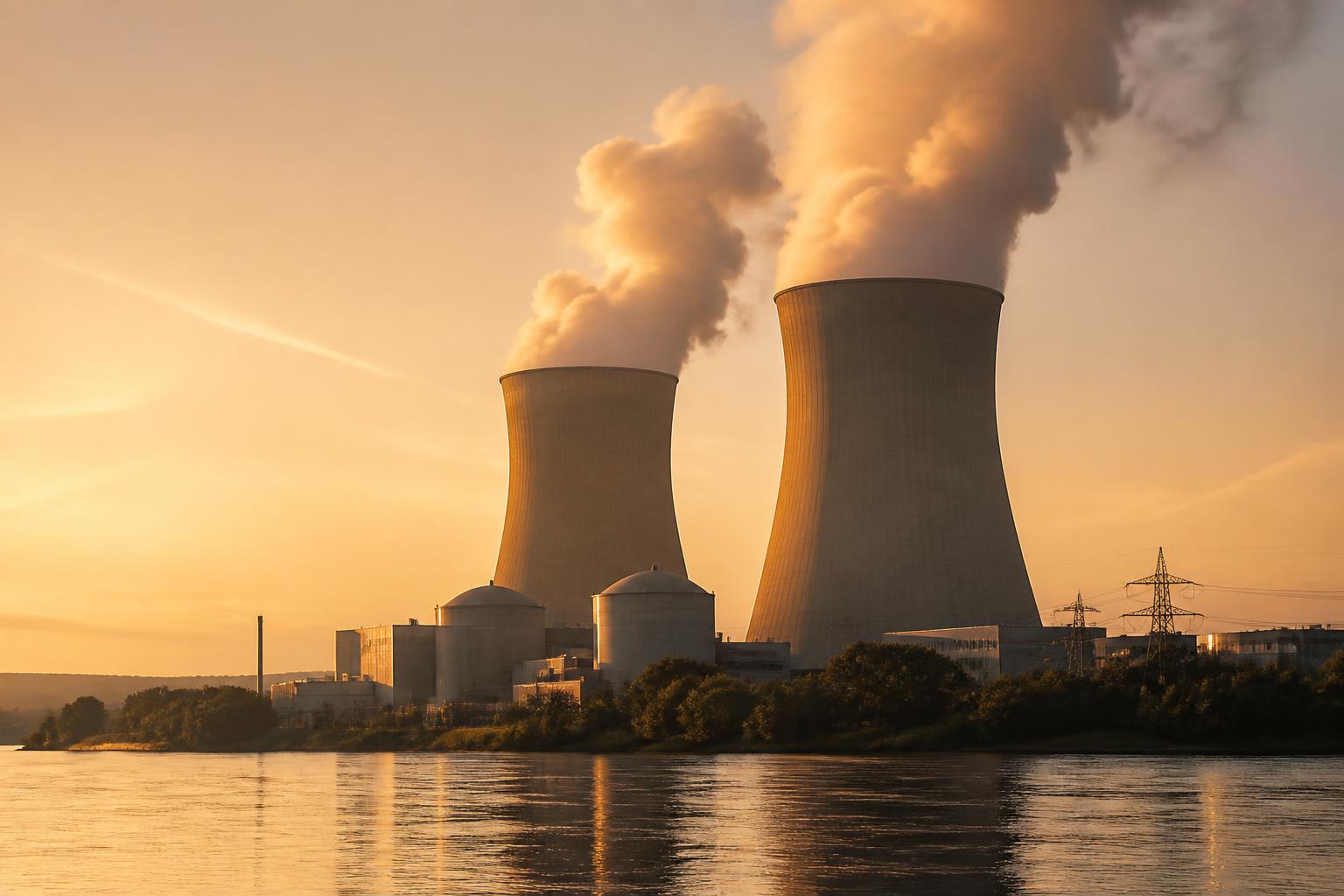
In southwestern France, the Golfech Nuclear Power Plant on the Garonne River (2 × 1300 MW pressurized water reactors) was forced to throttle output once more during the summer of 2026. The cause is no longer novel — it''s familiar: river temperature crossed the regulatory threshold for cooling discharge. It is the fifth such event in roughly two decades, and a clear sign that thermal generation carries a structural vulnerability to climate change.
This piece doesn''t treat the event as news, but as an engineering case: cooling-water thermodynamics, the logic of regulatory thresholds, a comparative view for other jurisdictions, and how renewable generation responds to the same climate stress.
1. Why Thermal Plants Depend on Water
Every thermal plant — nuclear, coal, CCGT, geothermal — runs on a Rankine or combined cycle whose efficiency is directly bounded by the temperature gap:
ηCarnot = 1 − (Tcold / Thot)
Thot is the steam side leaving the reactor or boiler; Tcold is the cold side of the condenser. The warmer the fluid cooling the condenser, the higher Tcold and the lower the theoretical efficiency. In practice this means producing less electricity from the same fuel or thermal power — classic thermal derating.
Two Cooling Architectures
- Once-through: A large flow is drawn from a river or sea, passes the condenser once, and returns 7–12 K warmer. High efficiency, but extremely source-sensitive.
- Closed-loop (cooling towers): The same water circulates repeatedly; heat is rejected to the atmosphere by evaporation. Far less water withdrawn, but far more consumed.
Golfech, like most European inland nuclear units, uses closed-loop towers. That doesn''t make it immune: the towers still require makeup water of roughly 2–3 m³/s, and the warmed return flow goes back into an already-warmer Garonne.
2. Regulatory Thresholds: Ecology, Not Efficiency
France''s nuclear safety authority, ASN, sets two distinct limits per site:
- Absolute temperature ceiling for river temperature downstream of the plant; for Golfech, typically 28–28.5 °C.
- ΔT (delta-T) budget: the temperature rise between intake and discharge; usually capped at +2 K in summer.
These limits exist to protect the river ecosystem — fish oxygenation, microbial balance, algal blooms — not reactor safety. Once a threshold is crossed, the operator faces three options: derate output, shut down a unit, or request a temporary derogation from ASN — rarely granted, narrowly scoped.
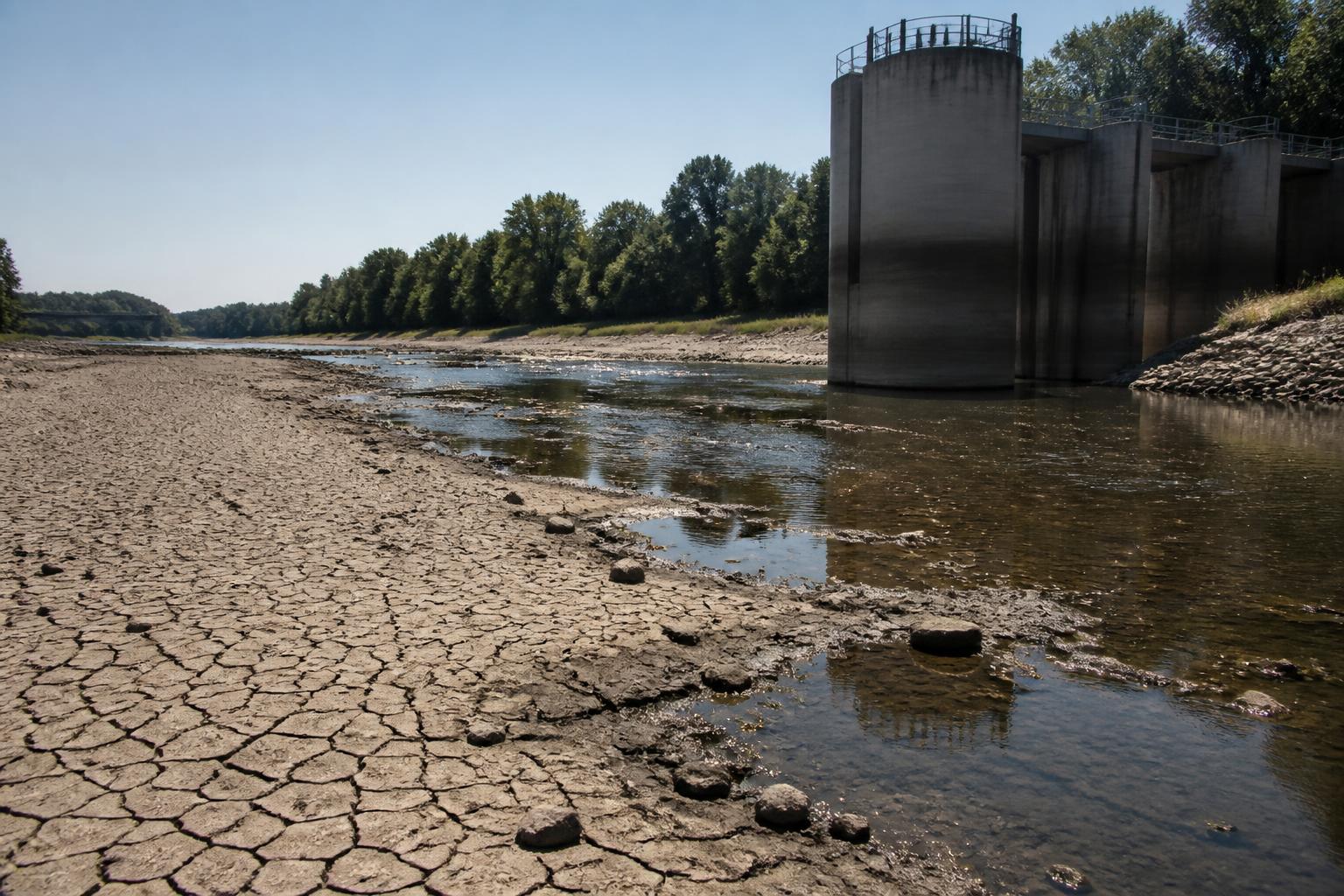
During the late-June 2026 heatwave, Golfech was not in a position to push the third option: river flow was already low and downstream temperature was pinned above the limit. Result: a staged production cut.
3. A Recurring Pattern, Not an Outlier
- 2003: Historic European heatwave — much of the French fleet derated or shut
- 2018 & 2019: Successive summer curtailments on the Garonne and Rhône basins
- 2022: Extended derogations during a prolonged drought, including Golfech
- 2026: An early-summer heatwave, another derate
The recurrence means climate trend is cutting site-level capacity factors cumulatively. For EDF, the lost output since 2003 reaches the annual-TWh scale across multiple years.
4. Engineering Responses and Their Limits
- Hybrid wet/dry cooling towers: Switch to dry mode at high ambient temperature; costly and imposes an efficiency penalty.
- Coastal siting: Only viable for new build; cannot retrofit the inland fleet.
- Flexible backup (CCGT + BESS): Fast-response capacity to cover derate events.
- Demand response and cross-border trading: ENTSO-E balancing — France can become a net importer during severe summers.
5. How Renewables Behave Under the Same Stress
- PV: Power coefficient drops by roughly −0.30 to −0.45 %/°C with cell temperature (Tcell). A module rated at 25 °C loses about 10–15% at Tcell ≈ 60 °C. Material, but not grid-stopping.
- Wind: Hot, stagnant air typically reduces output; thermal cut-out (~ +45 °C) rarely triggers.
- BESS: Without thermal management, cycle life and C-rate suffer; modern HVAC-equipped systems lose negligible hourly capacity.
- Hydro: Affected by low flow like thermal, but manageable on a weekly-to-monthly horizon.
Net effect: one nuclear unit shutting down during a heatwave hits the grid harder than tens of thousands of distributed PV inverters derating by 12%. Distributed generation provides topological resilience to climate shocks.
6. The SmartPlain View: Making Thermal Stress Observable
- Per-inverter Tcell × AC output regression — deriving real, site-specific derating coefficients
- Comparative PR (Performance Ratio) reports before, during, and after heatwaves
- BESS thermal-limit alerts (cell delta, coolant COP drop)
- Climate-adaptation reporting: attributing annual production loss to temperature distribution

7. Closing
The Golfech case is not about being for or against nuclear. It is about the fact that the environmental inputs thermal generation depends on are themselves shifting with the climate signal. Cooling water, once treated as a fixed parameter, is now a variable input to the annual production plan.
That means reinvestment in the existing thermal fleet (hybrid towers, flexible backup) and a distributed, climate-resilient architecture for the future generation mix. When the next heatwave arrives, the engineering question should not be "did we lose output?" — it should be "how distributed were we, and where?"
Original news source: Enerji Günlüğü. The technical analysis and commentary in this article are by the SmartPlain editorial team.