
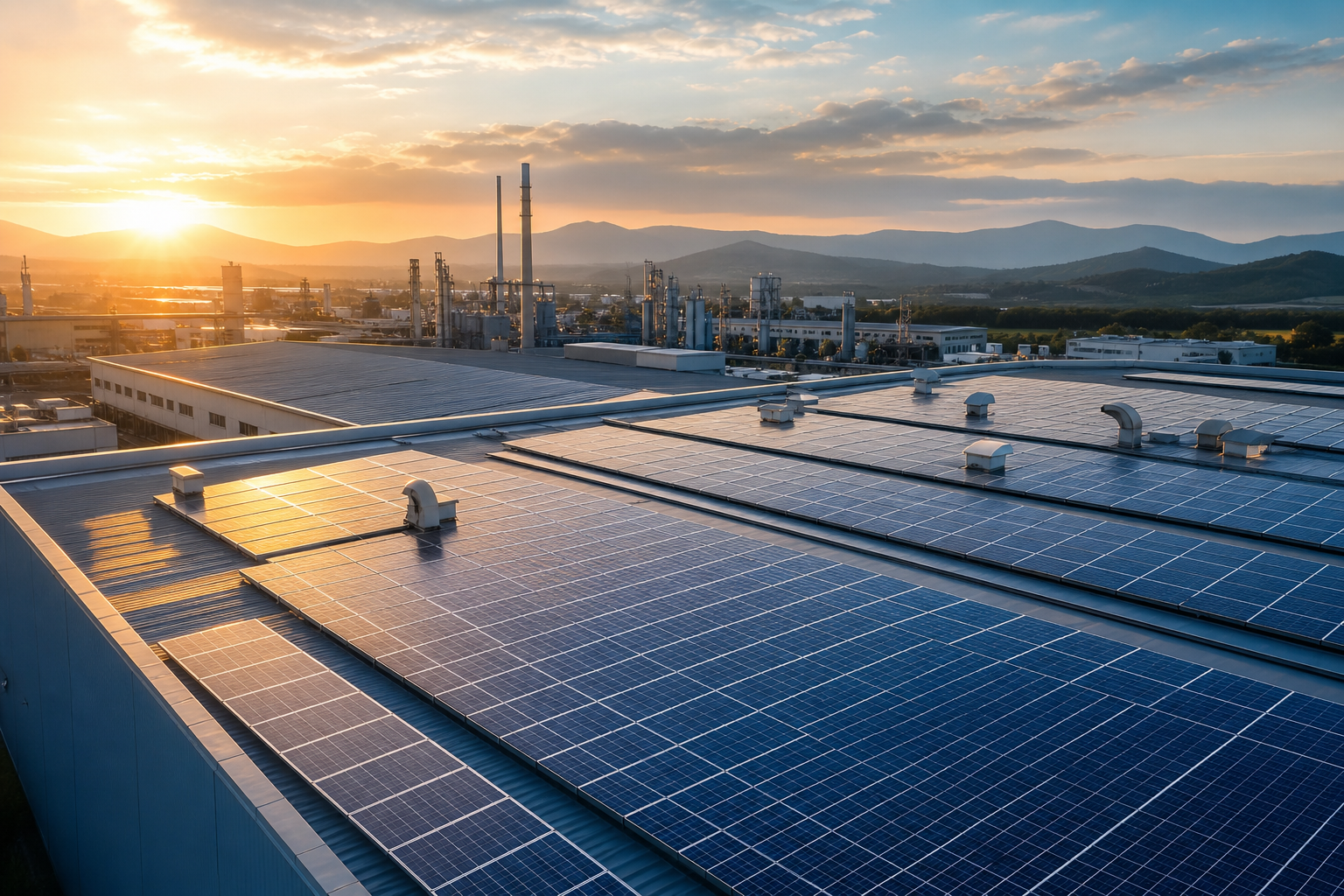
Volatility in global energy markets and sustainability-oriented regulations are radically changing the energy strategies of industrial facilities. Until recently, Solar Power Plant (GES - Güneş Enerji Santrali) investments, which were structured around "selling energy to the grid," are now leaving their place to systems fully optimized for self-consumption. In the new era shaped by updates in EPDK (Energy Market Regulatory Authority) regulations and articles such as 5.1.h, consuming energy where it is produced has become not only an environmental responsibility but also a financial necessity. This transformation process requires the integration of correct engineering, precise sizing, and advanced energy monitoring technologies.
From Grid Sales to Self-Consumption: A Paradigm Shift
In the old model, investors aimed to install power plants at maximum capacity regardless of their needs and sell the surplus energy at government-guaranteed prices (YEKDEM - Renewable Energy Resources Support Mechanism). However, changing market conditions and increases in transmission fees have increased the cost of "pushing energy to the grid." In the new era, the real gain is achieved by substituting self-produced energy for each unit of kilowatt-hour (kWh) purchased from the grid.
Relationship Between LCOE and Self-Consumption
Levelized Cost of Energy (LCOE) represents the cost of a unit of energy produced over the lifetime of a project. In a self-consumption-oriented model, solar energy, which has a much lower LCOE value, is substituted for high-tariff energy drawn from the grid. This directly reduces operational expenses (OPEX), increasing the company's competitiveness.
Correct Sizing: The Golden Rule
The success of an SPP project is measured not by the excess number of panels, but by its compatibility with the facility's consumption profile. A system installed larger than necessary causes the self-consumption rate to drop and the return on investment (ROI) period to extend. AI-powered platforms like Smartplain play a critical role in determining the most efficient capacity by analyzing the facility's historical consumption data.
- Base Load Analysis: The factory's minimum energy needs during holidays and night shifts must be determined.
- Peak Consumption Hours: The shiftability of production processes to hours when the sun is at its zenith should be evaluated.
- Future Projection: New machines or electric vehicle charging stations to be added to the facility should be included in the capacity calculation.
Case Study: Textile Factory Example
A textile factory with an annual consumption of 2,000,000 kWh plans to install a 1.5 MWp capacity system to meet all its needs. In the data analysis, it was found that the factory does not operate on Sundays and 80% of the energy produced on these days is fed to the grid at a low price. The engineering team succeeded in reducing the ROI from 5.2 years to 4.4 years by reducing the system to 1.2 MWp and shifting the remaining budget to energy storage or efficiency-enhancing projects.
Rooftop vs. Land-Type SPP: Which is More Advantageous?
In self-consumption models, the choice of location differs both in terms of legislation and technical aspects.
Rooftop Applications
It is the most efficient model in terms of utilizing existing idle areas. The fact that transmission and distribution losses are minimum ensures full compliance with the principle of on-site consumption. Furthermore, it does not require additional land costs if static projects are suitable.
Land-Type Self-Consumption (Net Metering)
For industrialists with insufficient roof space, it is possible to install on land at a different measurement point (provided it is in the same distribution region). However, since distribution fees and system usage fees come into play here, financial modeling must be done much more precisely.
Panel and Inverter Selection According to Consumption Profile
In self-consumption-oriented systems, not only the quality of the equipment but also the compatibility of the equipment with each other is important. String Inverters offer higher efficiency on roofs with partial shading or panels facing different directions. On the panel side, high-efficiency TOPCon or HJT cell technologies maximize limited roof areas by obtaining more energy per unit area.
Energy Monitoring and Management: You Can't Manage What You Can't See
Investing in an SPP is just the beginning of the process. End-to-end monitoring is essential to understand whether the system is operating at the designed efficiency. Energy management software like Smartplain provides the following advantages by tracking not only production data but also consumption data in real-time:
- Instant Monitoring: "Zero export" control over the production and consumption balance.
- Error Detection: Immediate detection of panel soiling, inverter failure, or cabling losses.
- Reporting: Providing verified data for CSRD (Corporate Sustainability Reporting Directive) and CBAM (Carbon Border Adjustment Mechanism).
Sustainability and Regulatory Compliance
The Carbon Border Adjustment Mechanism (CBAM), implemented by the European Union within the framework of the Green Deal, has made self-consumption-oriented SPP a necessity rather than a choice for exporting companies. A facility that produces its own energy from the sun provides a tax advantage and competitive edge in the international market by minimizing the carbon footprint per product.
Frequently Asked Questions (FAQ)
What is the payback period for self-consumption oriented SPP investments?
Considering the current electricity tariffs and sunshine durations in Turkey, self-consumption oriented SPP projects on industrial roofs generally pay for themselves within 4 to 6 years. This period may vary according to the quality of equipment used and financing costs.
Is it still logical to sell surplus energy?
If the facility's consumption varies greatly during the day or if there are shutdowns on weekends, feeding the surplus energy to the grid is a revenue item. However, the main focus should be saving on energy purchased from the grid, not profiting from grid sales.
Are Energy Management Systems (EMS) a luxury?
No, EMS is a necessity, especially in self-consumption models. Data-driven management is essential to understand how much of the energy produced is used within the facility, how much is lost, and which processes are energy-intensive. These systems can increase the total efficiency of the investment by 10-15%.
Why is the static compliance certificate critical?
In rooftop SPP projects, the additional load brought by the panels and mounting systems must be able to be met by the building's structural system. Projects started without a static report pose both security risks and obstacles in insurance processes.