
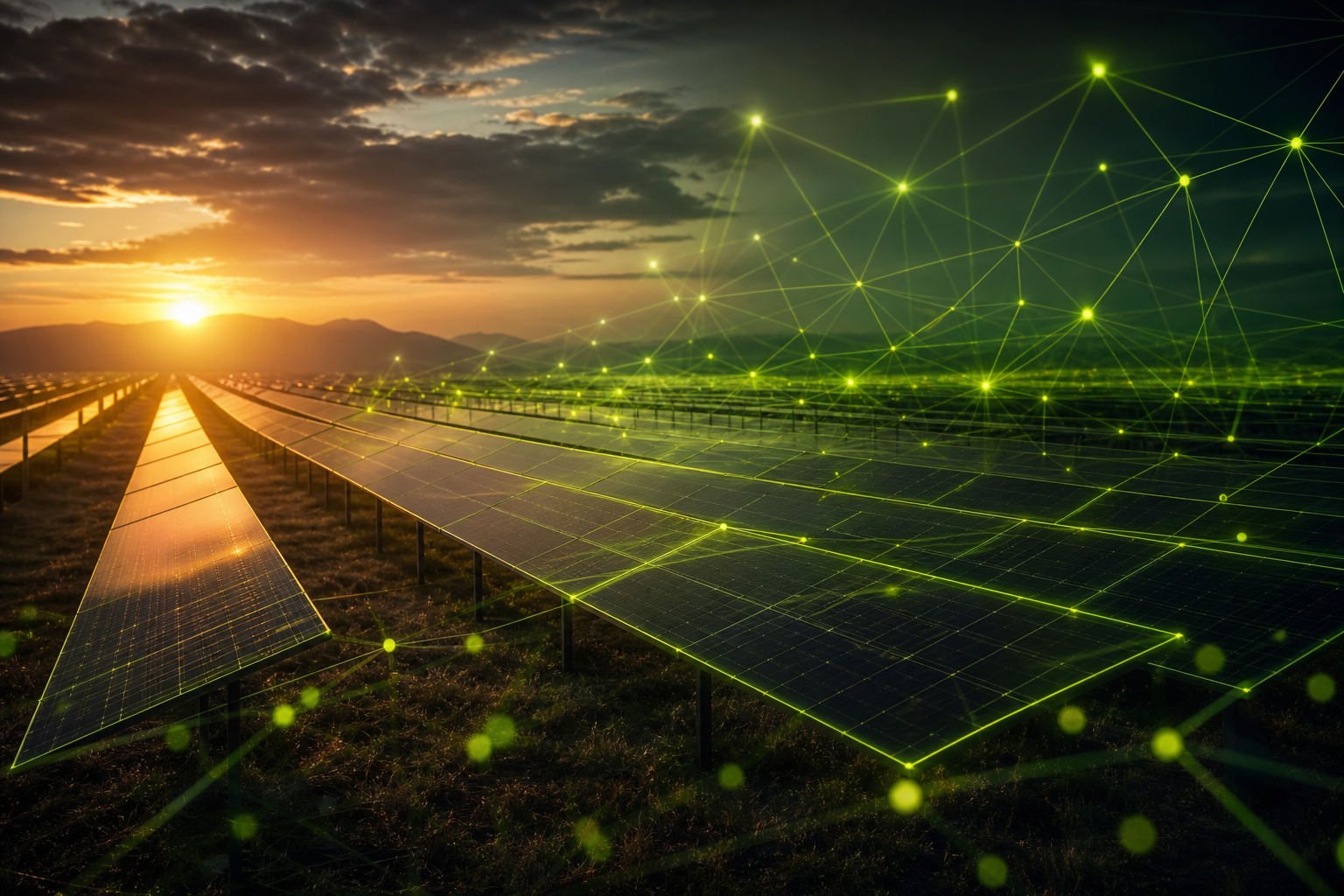
The energy sector is undergoing a radical transformation at the intersection of digital transformation and sustainability. Integrating variable renewable sources like solar energy into the grid brings new challenges, both technically and economically. Today, for a solar power plant (GES - Solar Power Plant) operator, the fundamental question is no longer just 'how much energy can I produce?' but 'with what precision do I know how much I will produce at 14:00 tomorrow?' At this point, Artificial Intelligence (AI) and machine learning-based forecasting models are setting a new standard in energy management by replacing traditional statistical methods.
Fundamentals of AI-Based Production Forecasting
Traditional energy forecasting methods often relied on simple regression analysis or limited meteorological data. However, solar energy production is affected by dozens of non-linear variables such as cloud cover, aerosol density, panel temperature, and the albedo effect. Through Deep Learning algorithms, AI can identify hidden correlations between these complex datasets.
Data Requirements and Data Quality
The success of an AI model is directly proportional to the quality of the data it is fed. For effective solar production forecasting, the following data groups are required:
- Historical Production Data: The plant's past performance records form the basis for the model's 'learning' process.
- High-Resolution Meteorological Data: Global Horizontal Irradiance (GHI), Direct Normal Irradiance (DNI), wind speed, and ambient temperature.
- Satellite Imagery and Sky-Cam Data: Plays a critical role in short-term (nowcasting) forecasts for tracking instantaneous cloud movements.
- Plant Telemetry: Inverter efficiency, panel soiling rates, and planned maintenance outages.
Machine Learning Models: Which Algorithm is Better?
Algorithms used in energy forecasting vary according to the forecast horizon (short, medium, or long term). The most commonly used models in the industry include:
1. RNN and LSTM (Long Short-Term Memory)
When working with time-series data, preserving the sequence of past data is critical. LSTM networks show superior success in predicting fluctuations in solar radiation due to their ability to remember long-term dependencies in data.
2. XGBoost and Random Forest
These decision tree-based algorithms are highly efficient for classifying and weighting the effects of different meteorological variables on production. Their low computational cost provides an advantage for real-time forecasting.
EPİAŞ and Imbalance Cost Management
In the dynamics of the Turkish energy market, Day-Ahead Market (GÖP) and Intra-Day Market (GİP) operations are directly tied to accurate forecasting. The difference between the production amount reported to EPİAŞ (Energy Exchange Istanbul) and the actual production is reflected to the operator as 'Imbalance Cost'.
Case Analysis: Consider a GES facility with 10 MW installed capacity. Suppose the error rate (MAPE) for forecasts made with traditional methods is 15%, whereas an AI-based system like SmartPlain reduces this error to 5%. On an annual basis, this 10% improvement translates to hundreds of thousands of TL in savings on negative imbalance items. Furthermore, changes in the YEKDEM (Renewable Energy Resources Support Mechanism) and volatility in PTF (Market Clearing Price) have made forecast accuracy a financial necessity rather than an operational preference.
SmartPlain: The Power of AI in Forecasting
WorkyBe's SmartPlain solution offers a hybrid forecasting model by processing not only meteorological data but also real-time data from IoT devices in the field. During compliance with CBAM (Carbon Border Adjustment Mechanism) and CSRD (Corporate Sustainability Reporting Directive) standards, the system also helps manage your carbon footprint by optimizing energy production efficiency.
Why Choose SmartPlain?
- Dynamic Learning: The model constantly updates itself based on panel aging at the plant or environmental changes (e.g., shadows from new buildings).
- Error Rate Optimization: It selects the most suitable algorithm for current weather conditions by competing different AI models.
- Ease of Integration: Full compatibility with SCADA and ERP systems.
Frequently Asked Questions (FAQ)
How much can AI reduce the forecast error rate?
The error rate depends on the region's climate conditions and data quality. However, under ideal conditions, AI-based models can reduce error rates (MAPE) to the 3% to 7% range, which is up to a 50% improvement over traditional models.
How much historical data is needed to set up a forecasting system?
Typically, at least 6-12 months of historical production and local meteorology data are recommended for models to begin producing meaningful outputs. However, this period can be shortened using synthetic data generation methods.
Do forecasts only provide financial gain?
No, in addition to financial gain, operational benefits are also critical. Technical advantages such as accurate maintenance planning, early diagnosis of malfunctions, and preservation of grid stability are also provided.
Can EPİAŞ notifications be automated?
Yes, advanced platforms like SmartPlain can minimize operational workload by transferring AI-generated forecasts directly to EPİAŞ systems (for GÖP and GİP entries) via API integration.